|
|
|
|
|
|
|
|
|
|
|
|
|
|
|
|
Prioritize consent instead of coercion in tobacco control strategies
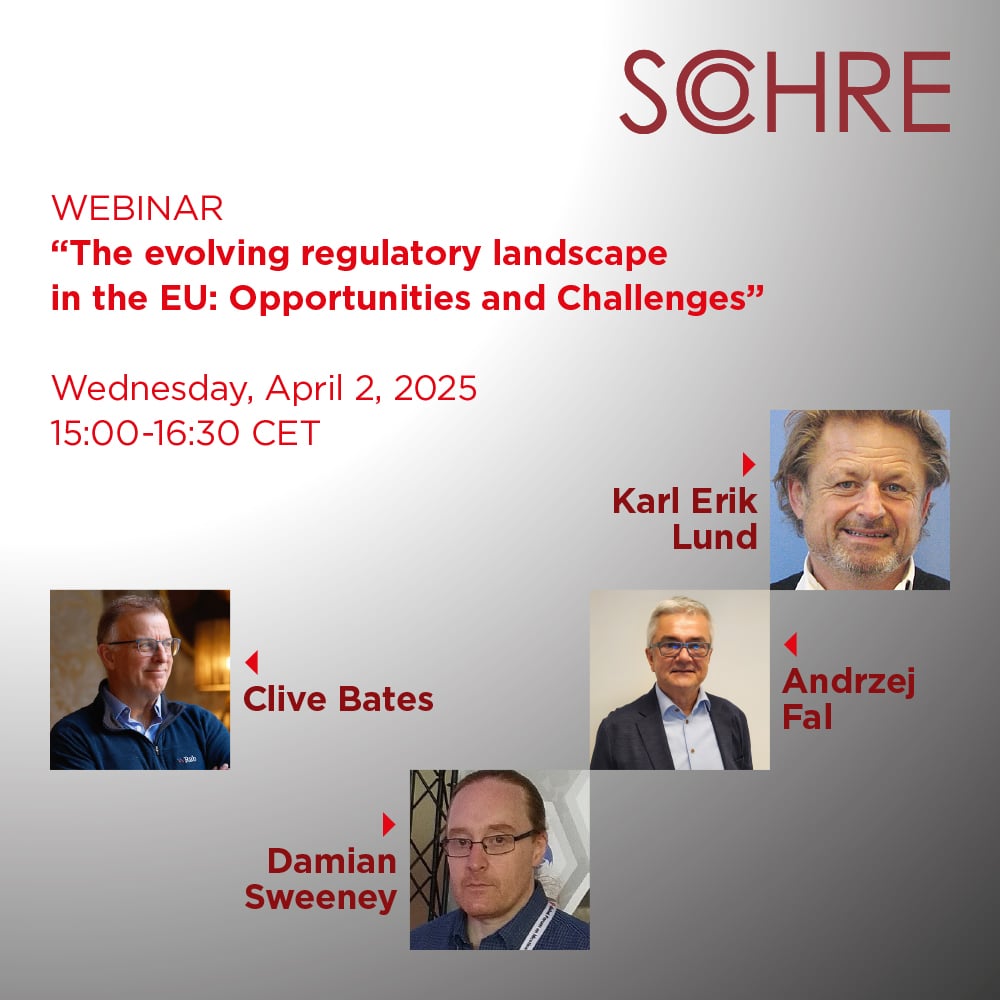
Thursday, April 3rd, 2025 -- SCOHRE Webinar titled “The evolving regulatory landscape in the EU: Opportunities and Challenges” took place on Wednesday, April 2nd, with participation of international experts on tobacco policy who addressed regulative aspects of tobacco harm reduction both from the top-down perspective of the regulator and the bottom-up perspective of the consumer.
Introductory thoughts on the legitimacy of nicotine regulations
Moderator Karl Erik Lund, PhD, Senior Researcher, Norwegian Institute of Public Health, Norway, with the experience of almost 40 years on tobacco control and tobacco research in government agencies, shared some general reflections on the legitimacy of nicotine regulations and highlighted some of the dilemmas regulators face when crafting nicotine policy. Regulators must determine the line between an ethically justified interference and the exaggerated infringement of the users right to “live as they choose” as informed individuals. There is a belief that people are not informed, they are not aware of the risks. Dr Lund presented the findings of a Norwegian study which identified three types of nicotine users who display distinct behaviour when it comes to changing their smoking habits: the ones that continue to use against their discomfort and knowledge of risks—who are receptive of restrictive measures and best placed to quit smoking (Dissonant Smokers: approx. 30%); the ambivalent users, whose behaviour fluctuates often and is unpredictable (Ambivalent Smokers: approx. 20%). Finally, the users who, while being aware of the risks, do not wish to quit their habit and will not easily comply with restrictions by regulators (Consonant Smokers: approx. 50%). Information about the numbers and behaviour of each category of users is important for policymakers in deciding the measures to take.
Finally, it is often seen that the evidence presented by research is mainly intended to provide a legitimizing and moral basis for the measures that governments and regulators have already decided to promote. In this way, we end up with policy-based evidence rather than evidence-based policies, Dr Lund concluded.
What consumers need from the regulator
Damian Sweeney, as a founding member of the consumer advocacy association the New Nicotine Alliance Ireland (NNA Ireland) and a partner with the European Tobacco Harm Reduction Advocates (ETHRA), gave a brief overview of the organizations and what they do. He discussed the current EU policy around safer nicotine products and how that relates to consumers. Sweeney also discussed the implications of the Tobacco Excise Directive and the Tobacco Products Directive, highlighting a focus on youth risks over harm reduction opportunities. He expressed concerns about potential flavour bans and nicotine content restrictions, arguing that these could impede smokers' transitions to safer alternatives.
Sweeney advocated for a smoke-free target rather than a tobacco-free one (which is the EU’s Beating Cancer policy target), emphasizing that combustion is the primary cause of cancer. He shared personal experiences to illustrate the importance of flavours in smoking cessation, the need for wide choice of nicotine products and affordability in encouraging smokers to switch to safer alternatives. He warned that restrictive policies might lead to increased black-market activity, to the use of self-made products (such as mixes for vaping) that can be dangerous, and eventually back to tobacco smoking. Sweeney called for greater consumer involvement in policymaking through joining existing associations or creating new.
What can and should be done? Tobacco control 2.0
Clive Bates, Director, Counterfactual, provided a historical context for tobacco control, noting that many strategies from the 1990s are now outdated. He pointed out the significant health consequences of tobacco use and pointed out that its impact is comparable to that of the COVID-19 pandemic, killing 700,000 people in EU every year. He discussed the EU's ambitious goal of reducing adult tobacco use to less than 5% by 2040 and said that it’s unlikely to be achieved without reevaluating current strategies. Nicotine use is not going away, he stated, and added that “we need to understand why people smoke.” Research by Prof. Neal Benowitz, an expert on nicotine, identified several perceived benefits of nicotine use, such as stimulation, relaxation, mood modulation, weight control, etc, which contribute to its appeal for approximately 1.3 billion people worldwide.
Bates presented evidence that a range of nicotine products, such as vaping, heated tobacco products and snus are much safer alternatives to smoking due to their lack of tar exposure. Using the case of Sweden as proof of concept of tobacco harm reduction strategy, he compared smoking and nicotine use in Sweden and Germany. He emphasized the findings showing that Sweden's lower smoking rates and higher snus usage result in significantly lower lung cancer rates, as well as lower rates in other cancers. EU's ban on snus deprives millions of smokers in Europe of a safer alternative, he said, and presented data showing that alternative products are much less hazardous than traditional cigarettes. Conversely to EU and UK, he noted the positive trends in smoking cessation linked to increased use of vapes or heated tobacco products, particularly in the UK, New Zealand and Japan.
As the process of modifying the EU directives on tobacco products is beginning, we need to understand that “tobacco and nicotine policymaking is the art of navigating trade-offs and unintended consequences,” he said. He warned against regulatory measures aimed at reducing vaping appeal—such as bans and taxes—as such measures could lead to increased smoking rates and illicit trade. He referred to various studies and stressed the need for evidence-based policymaking in tobacco and nicotine regulation.
Bates also presented a series of “ungovernable” issues for regulators, starting from the unprecedented situation in illicit trade and the supply chain: there is a very diverse range of products entering the EU, with a significant portion coming from China; the scale of trade in disposable vapes is massive, with minimal inspection at major ports, which are often infiltrated by criminal networks. Lastly, there is a great increase in communications via social media and online sales.
Bates argued for a shift in tobacco control strategies to prioritize informed consent instead of coercion, suggesting that effective regulation should focus on providing safer alternatives to high-risk products. He also highlighted the importance of addressing youth concerns while recognizing that the primary focus should be on adult smokers.
Will the new directive meet expectations?
Professor Andrzej Fal, MD, PhD, MBA, FAAAAI, President, Polish Society of Public Health; Director, Institute of Medical Science, UKSW, pointed out that the answer to the question whether the new directive will meet expectations may vary depending on the assumed perspective of the legislator or consumer.
He referred to the context of tobacco use over time and the slow progress in reducing smoking rates in Europe and particularly in Poland. The timing of the revision of the TPD, 20 years after the adoption of the first Directive, is appropriate from a public health perspective, as outcomes of the policies and systemic changes can be observed, he said. Having proposed several regulatory measures to the Polish Parliament, including raising excise taxes on tobacco products and implementing licensing for sellers, Prof. Fal argued that these changes are necessary to address the increasing number of smokers and to align with public health goals.
In order to significantly improve the potential to control and combat addiction, he suggested that the new TPD Directive should, among others:
__institute the obligation for member states to use excise tax as a tool to reduce the availability of prices and to rank the products covered by the Directive according to harmfulness (“less harm, less tax”)
__establish that member states must conduct research to clarify whether and which products are less harmful and whether their use by smokers is justified in order to combat addiction.
__require the registration and, consequently, licensing of all outlets that may sell products covered by the directive.
Regarding smoking cessation strategies and policies, he criticised the objections raised by organizations like the European Respiratory Society concerning evidence-based approaches to COPD treatment. In contrast, he noted, the British Thoracic Society on the occasion of the recent Tobacco and Vapes Bill, offer their support to the use of vaping for smokers in their efforts to quit.
Commenting on what was previously discussed by Dr Lund, that about 30% of smokers are willing to quit, Prof. Fal pointed out the need for member states to learn from successful policies in Northern countries among others. To conclude, he suggested that combining multiple tools and strategies, including excise taxes, could lead to more effective smoking cessation outcomes.
The video recording is available on SCOHRE’s YouTube channel:
|
|
|
|
|
|
|
Issues raised during the webinar
_What are the potential unintended consequences of bans of nicotine products?
_How can consumers effectively engage with policymakers regarding tobacco regulations?
_How can the tobacco control policy be improved to better serve consumers?
|
|
|
|
|
|
This webinar was organised by SCOHRE, the International Association on Smoking Control & Harm Reduction.
|
|
|
|
|
|
ABOUT SCOHRE
SCOHRE is an International scientific Association of independent experts on Smoking Control & Harm Reduction, who seek an open and constructive dialogue to help come up with a new approach to smoking control policies.
Our purpose is to provide stakeholders with science-based balanced information. Tobacco harm reduction debate is still at an early stage and more research and publications are needed.
We need to raise awareness on existing knowledge, benefit from already existing solid expertise in many countries, and create more opportunities for education of health policy experts, regulators, and the public.
We will work to generate more evidence that harm reduction in smoking should be implemented along with smoking prevention and smoking cessation to counterfeit the detrimental effects of smoking.
We will establish new research to generate more evidence to cast out all doubt.
|
|
|
|
|
|
|
|
|
|
|
|
|
|
|
|
|
|
Our mailing address is:
SCOHRE
Michel Ange 12
B-1000 Brussels
Belgium
Want to change how you receive these emails?
|
|
|
|
|
|
|